Multi-Club Ownership (MCO) has moved from an aggressive diversification play to the dominant corporate architecture of global football finance. Roughly 380 clubs worldwide now sit inside MCO structures, nearly 42% of teams across Europe's top five leagues.[1] These networks pursue real efficiencies, shared scouting, cross-border development pipelines, and centralised back offices, but they collide with the core premise of sports governance: public confidence that no single owner can influence the outcome of a match between two of its own clubs. UEFA's Article 5 is the primary flashpoint, though it is no longer the only one; the FIFA transfer system is now an equally live exposure.[2]
The Architecture of UEFA Article 5
UEFA Article 5 of the Regulations of the UEFA Club Competitions prohibits any person or entity from controlling or exercising decisive influence over more than one club in European competition, through a club-to-club ban, a person-to-club ban, and a decisive-influence test.[3] Article 5.05 permits commonly controlled clubs to compete concurrently if they qualify for separate tournament tiers; where both land in the same tier, a hierarchy applies: the more prestigious domestic route, then league position, then the member association's UEFA coefficient.[4] The CFCB's May 2024 guidance operationalised “decisive influence” with quantitative triggers: 30% of equity or voting rights (10% if the largest shareholder), 30% of structural revenue or debt underwriting, shared C-suite roles, or three or more intra-network transfers in a season.[5] These are CFCB soft law, not Executive Committee amendments to Article 5 itself, and that distinction supports a genuine notice-and-vagueness argument for any club or passive investor caught by the 10% threshold.
The March 1st Snapshot
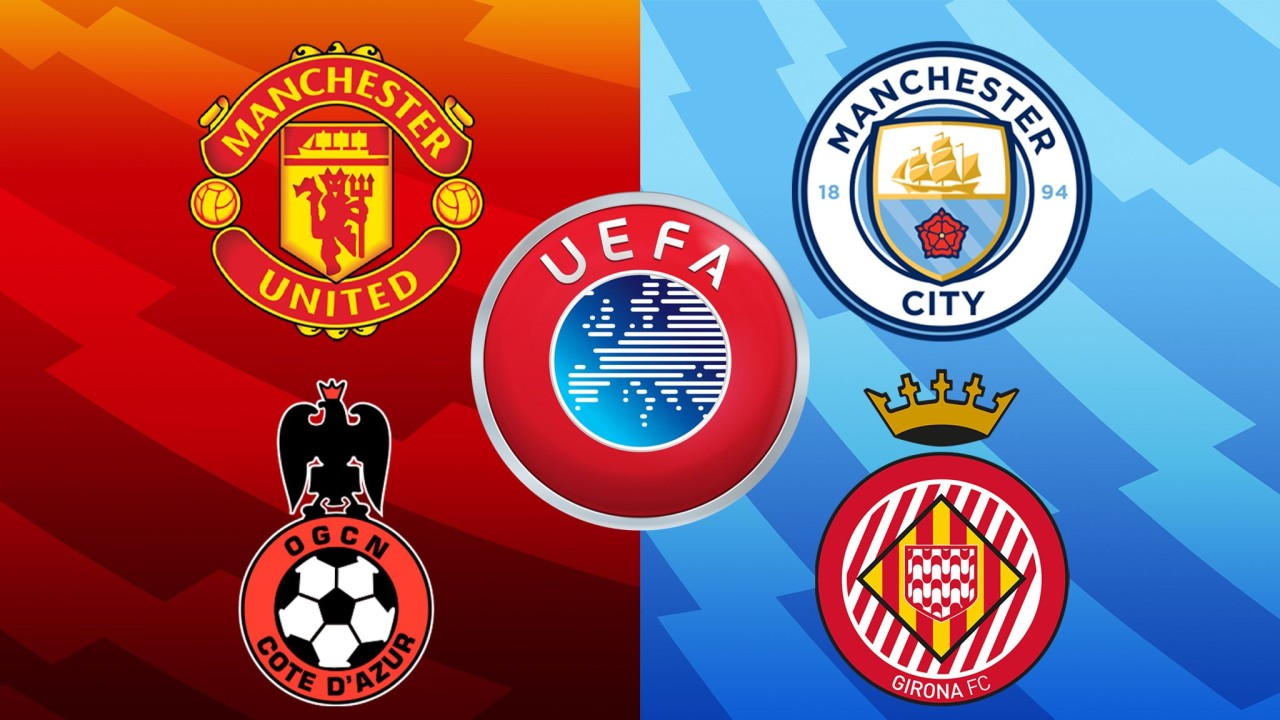
The compliance snapshot is fixed at March 1st preceding the season, and it is strict and effectively incurable; late remediation does not cure a breach found at the assessment date.[6] Crystal Palace's 2025 exclusion from the Europa League illustrates the commercial stakes: an unforeseeable FA Cup win produced European qualification months after the deadline had passed, and the club was demoted to the Conference League regardless, losing a materially larger prize pool and broadcast share.[7] Blind trusts, the device that allowed Manchester City/Girona and Manchester United/Nice to coexist through 2024/25, are no longer a durable shield. UEFA's Executive Committee Circular 69/2025 confirmed trusts fail if the beneficial owner retains any dominant economic stake, and CAS reached the same result at FIFA level in May 2025, rejecting Club León's trust in the Club World Cup dispute.[8] The surviving compliance routes are permanent structural separation or genuine dilution, the approach V Sports took with Vitória SC in 2023, cutting its stake to 29% and giving up its board seat.[9]
The 2025 CAS Precedents, and Their Limits
Three 2025 CAS awards currently anchor Article 5 enforcement. In Crystal Palace FC v. UEFA, the panel held that decisive influence is assessed by capacity, not by proof of actual conduct, and that a post-deadline sale does not cure a March 1st breach.[10] Drogheda United FC v. UEFA affirmed the UEFA's legitimate interest in policing multi-club integrity risk.[11] FK DAC 1904 Dunajská Streda v. UEFA applied the same capacity standard to overlapping executive roles between DAC and Győri ETO FC.[12] These outcomes should not be read as final. Whether a tribunal this embedded in the sports movement can supply the “effective, independent review” the CJEU now demands of market-access criteria is itself an open question, contested in the parallel line running through Mutu and Pechstein v. Switzerland at the European Court of Human Rights and the Belgian Seraing v. FIFA litigation.[13] If a national EU court declines to treat a CAS award as discharging that obligation, Article 5 disputes become relitigable as ordinary competition claims.
The Antitrust Crossroads
MCO advocates invoke Articles 101 and 102 TFEU, arguing Article 5 unlawfully restricts market access.[14] The old shield, built on ENIC v. UEFA and Meca-Medina, was never absolute; it required a case-by-case showing of proportionality, not a blanket exemption.[15] Two recent CJEU rulings matter, for different reasons. European Superleague Company v. FIFA & UEFA struck down governance structures where a single body organises a competition, sets entry criteria, and reviews its own decisions: such criteria must instead be transparent, objective, non-discriminatory, and subject to genuine independent review. Article 5 fits that fact pattern closely.[16] Diarra v. FIFA is a labour-mobility case striking down transfer-liability rules under Articles 45 and 101 TFEU; it bears more directly on intra-network player movement than on ownership eligibility itself.[17] Article 5's narrow tailoring to a specific integrity risk likely survives a full proportionality review better than a blanket ban would; its weakest feature is the March 1st deadline's refusal to accommodate unforeseeable qualification, not the ownership concept itself. Club León & Pachuca v. FIFA, though a Swiss-law CAS dispute with no EU nexus, confirms the same distrust of thin trust structures at the global level.[18]
4.1 The Overlooked Exposure: RSTP and the Clearing House
Article 5 governs whether network clubs may compete against each other; it says nothing about how they trade players with each other, which is the more frequent exposure. RSTP Article 18ter's ban on third-party ownership of economic rights is triggered whenever an internal transfer is priced away from arm's-length valuation, and every such transfer now runs through the FIFA Clearing House, which centrally enforces solidarity contributions and training compensation.[19] A network has a direct incentive to underprice intra-group deals, since doing so shrinks compensation owed to unrelated training clubs, a dispute-generating exposure that recurs every transfer window rather than only in qualification years. Centralised recruitment functions also sit awkwardly against FFAR Article 12's multiple-representation limits.[20]
Conclusion
Article 5's ownership-restriction concept is probably durable under a full post-Superleague proportionality review, because it targets a specific, well-evidenced risk rather than excluding a class of investor outright. Its administration is the genuine exposure: a rigid deadline with no accommodation for unforeseeable qualification, and a review process whose own independence is still being tested in parallel litigation. Clients should treat the March 1st calendar, not the ownership concept, as the point most likely to give way under future challenge. The RSTP solidarity and Clearing House exposure generated by intra-network transfers deserves independent monitoring, since it recurs every window and carries direct third-party liability regardless of how any single season's European qualification plays out.